
The liquidity in the banking system could ease in the coming week due to an increase in government spending - a development that would be the key for the Reserve Bank of India (RBI) to decide whether to extend the incremental cash reserve ratio (I-CRR) mandate for banks. There are signs of improvement in the liquidity scenario as banks parked Rs 25, 833 crore with the RBI on Thursday. Market participants expect liquidity to gradually improve by the end of the month or during the first week of September, aided by government spending.

If the banks throw caution to the winds for building loan books, the hydra-headed bad loans may resurface and spoil the party, warns Tamal Bandyopadhyay.

The Indian rupee, which has depreciated 1.1 per cent so far in August, is expected to decline further on the back of a strengthening US dollar and a weakening Chinese yuan, according to a Business Standard poll of analysts. The Indian rupee hit an all-time low recently, closing at 83.15 per dollar. Five of the 10 respondents said the Indian currency might touch 83.5 per dollar in August itself, while others said the worst could be over.

The yield on the 10-year bond may fall to 8.70 per cent due to FII flows in debt.

Asset quality stress has ballooned recently, as growth slowed and interest rates continued to rise.

The recent weakness of the rupee has been due to yuan's devaluation.

Friday's US data showed addition of 173,000 jobs in August.

Global liquidity expected to continue amid ECB stimulus

Foreign institutional investors (FIIs) are set to pump in more funds in debt securities, as the next government under the Bharatiya Janata Party (BJP) is expected to be a stable one and is seen as growth-oriented by market participants.

RBI's steps will prevent rupee from slipping, even if OMCs meet entire $ demand from market

To provide exporters/importers greater flexibility in risk management, RBI enhanced the limit available to exporters to 50 per cent
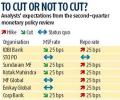
Analysts expect RBI to restore 100-bp corridor in Tuesday's policy review.

Inflation indexed bonds assure a positive return over inflation.

The rupee will largely remain stable but with a mild depreciating bias in the next one year
.jpg)
A weak rupee makes imports costlier, including oil and other commodities.

RBI Governor Raghuram Rajan has said falling oil prices act as a cushion for CAD, adding it is time India does away with restrictions on gold imports

RBI's liquidity tightening stance had stumped the Street as a result of which bond yields had risen.

Govt rules out controls on FII capital as Sensex tanks 3.97%, rupee breaches 62 intra-day & gold surges the most in two years

Some experts, however, see a silver lining in the fall and said the volatility has come down sharply and that bodes well for the Indian currency

BSE Auto was the top sectoral loser with a 4.6% fall followed by realty sector down 3.7% and consumer durables 3.6% post disappointing IIP numbers
 © 2026 Rediff.com - Advertise with us - Disclaimer - Privacy Policy - Sitemap - Feedback - About us - Terms of use - Grievances